Legal Notice Drafting in Delhi | Fast, Advocate-Drafted Notices
Delhi Advocate Advisor Professional Legal Notice Service Since 2010 — Money Recovery, Cheque Bounce, Property, Employment & Matrimonial Matters.
Call Now: +91 8130789810 WhatsApp Us
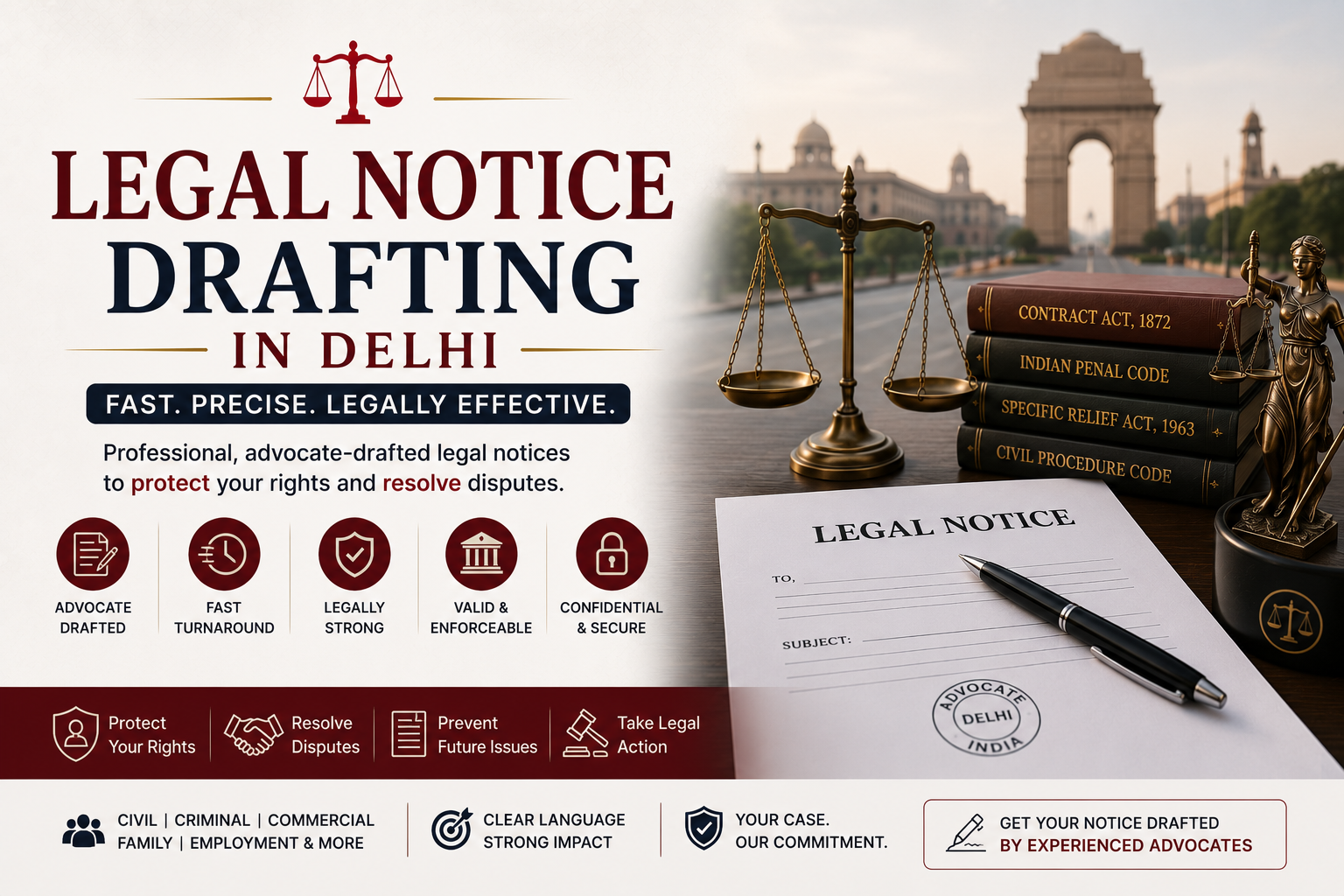
Legal Notice Drafting in Delhi — Often the Cheapest Legal Tool You Have
A legal notice is one of the most underused tools in Indian law — for a fraction of what litigation would cost, it can resolve disputes that would otherwise drag on in court for years. As your legal notice advocate in Delhi, we draft notices precisely, cite the correct legal provisions, and serve them properly, so the notice carries real legal weight before you spend a rupee on court proceedings.
What Is a Legal Notice, and When Is It Mandatory?
A legal notice is a formal written communication, sent by an advocate on your behalf, demanding a specific action — payment, vacating premises, stopping an activity — within a set deadline, typically 15 to 30 days.
For some disputes, sending one isn’t optional:
| Situation | Requirement |
|---|---|
| Cheque bounce complaint | Mandatory 15-day notice before filing — Section 138, NI Act, 1881 |
| Suing a government body | Mandatory 60-day notice before filing suit — Section 80, CPC, 1908 |
| Old tenancy termination | Notice to quit required — Delhi Rent Control Act, 1958 |
| Consumer complaints | Recommended, and mandatory in some forums — Consumer Protection Act, 2019 |
| All other civil/commercial disputes | Not legally mandatory, but strongly advisable |
Legal Notice Services We Provide
Money Recovery Notices
Sent when someone owes you money — a personal loan, a business debt, an unpaid invoice, or an advance payment — and isn’t repaying despite reminders. This creates pressure to settle and formally establishes your claim before any court proceeding begins. Covers personal loans between individuals, business payment defaults, unpaid invoices, withheld security deposits, and unreturned advance payments.
Note: A civil recovery suit must generally be filed within 3 years of the debt becoming due — don’t delay sending the notice.
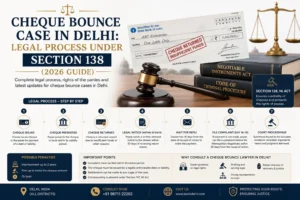
Cheque Bounce Notices (Section 138 NI Act)
Every detail in this notice matters — courts have dismissed cheque bounce complaints over an incorrect address, a wrongly stated bank memo date, an incorrect demanded amount, or a notice sent outside the 30-day window. This notice must be sent within 30 days of the bank’s dishonour memo, and the drawer then has 15 days to pay.
Property Dispute Notices
Sent to encroaching neighbours, tenants refusing to vacate, co-owners attempting an unauthorized sale, or builders withholding possession. Types include demands for removal of illegal construction, formal eviction notices with legal grounds stated, ownership-establishing notices to prevent adverse possession claims, and builder possession demands after full payment.
Employment Legal Notices
For employees: wrongful termination (citing the Industrial Disputes Act, 1947), unpaid salary (Payment of Wages Act, 1936), gratuity non-payment (Payment of Gratuity Act, 1972), PF/ESI default (EPF Act, 1952), and POSH Act violations. For employers: notices to absconding employees, and enforcement of non-disclosure or non-compete agreements.
Matrimonial Notices
For unpaid court-ordered maintenance, streedhan (jewellery and gifts) recovery, custody or visitation violations, harassment demands preceding a PWDVA application, and formal demands for restitution of conjugal rights.
Consumer & Builder Notices
For builders withholding possession (citing RERA Delhi and contract terms), service deficiencies from telecom, insurance, or banking providers, refund refusals, and insurance claim denials — often a required prerequisite before filing with RERA or a Consumer Forum.
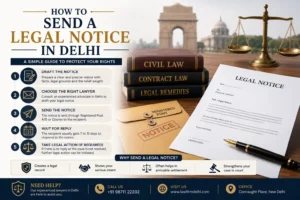
How We Draft and Send Your Notice
- Share Your Facts: Call or WhatsApp us with a brief description of the dispute, the recipient’s correct name and address, any supporting documents, and your preferred deadline — 15, 30, or 60 days.
- The Advocate Drafts the Notice: Your notice is personally reviewed and drafted by a qualified advocate — citing the specific facts, the exact legal provisions involved, a clear demand, and the consequence of non-compliance.
- You Review and Approve: We share the draft with you before sending, so you can confirm the facts, the recipient’s details, and the demand and deadline are exactly what you want.
- Dispatch by Registered Post with Acknowledgement Due: Sent by registered post with AD — the legally recognized standard mode of service — with a simultaneous email copy where useful. You receive the postal receipt, AD card scan, and your own copy of the dispatched notice.
- Follow-Up Advice: Once the notice is sent, we advise on next steps — whether the other party responds, what to do if the deadline passes without a response, and whether the right next move is court filing, a consumer forum complaint, or mediation.
What a Legal Notice Typically Costs in Delhi
| Notice Type | Typical Cost Range |
|---|---|
| Simple money recovery notice | ₹1,500 – ₹3,000 |
| Cheque bounce notice (Section 138) | ₹2,000 – ₹5,000, all-inclusive |
| Property dispute notice | ₹3,000 – ₹8,000 |
| Employment legal notice | ₹3,000 – ₹8,000 |
| Matrimonial / consumer notice | ₹3,000 – ₹10,000 |
| Complex or multi-party notices | ₹8,000 – ₹15,000 |
| Registered post charges | ₹50 – ₹200 (additional) |
| Reply drafting (if you’ve received a notice) | ₹2,000 – ₹8,000, depending on complexity |
Exact costs depend on the complexity of your matter — we confirm the total upfront before starting any work.
Received a Legal Notice? Here’s What to Do
- Don’t panic. Receiving a notice isn’t the same as losing a case — it’s simply a formal statement of the other party’s position.
- Don’t respond directly. Any informal reply — written or over WhatsApp — can be used as evidence against you later.
- Consult an advocate promptly, ideally within a day or two, since the deadline stated in the notice matters and time is limited.
- Send a formal reply through your advocate, if the claims are false or disputed. This puts your position properly on record and often resolves the matter without further escalation.
- Ignoring a legal notice doesn’t make it go away — in later proceedings, silence can sometimes be treated as an implicit admission.
Why This Work Should Only Be Done by a Qualified Advocate
Legal notices fall into a category where accuracy genuinely matters — an incorrectly worded or improperly served notice can weaken or even invalidate your later case. This is why every notice we draft is personally reviewed by a Bar Council-enrolled advocate, not generated from a generic template or handled by non-legal staff — with the correct statutory provision cited for your specific situation, whether that’s Section 138 of the NI Act, Section 80 CPC, Section 24 of the Hindu Marriage Act, or the PWDVA.
Frequently Asked Questions
Is it mandatory to send a legal notice before going to court in Delhi?
For some matters — cheque bounce cases and suits against government bodies — yes, it’s a strict legal requirement. For most other civil and commercial disputes, it’s not mandatory but is strongly advisable, since it often resolves the matter without needing to file a suit at all.
How long does the recipient have to respond?
This depends on the notice — commonly 15 days for cheque bounce matters, and typically 15 to 30 days for other disputes, though this can be adjusted based on the situation.
Can I send a legal notice myself without an advocate?
Technically yes, but a notice drafted without proper legal knowledge risks missing key statutory requirements, wrong provisions, or procedural errors that can weaken your position later — particularly in time-sensitive matters like cheque bounce cases.
Can a legal notice be sent by WhatsApp or email instead of post?
Registered post with acknowledgement due remains the legally recognized standard mode of service. Email can sometimes supplement it, but generally shouldn’t replace formal postal dispatch for anything you may need to rely on in court later.
What happens if the recipient refuses to accept the registered post?
Refusal to accept a properly addressed registered notice is generally treated as valid service in most legal contexts — the notice period typically still runs from the date of attempted delivery.
What’s the difference between a legal notice and a court summons?
A legal notice is a pre-litigation communication sent by one party to demand action before any case is filed. A court summons is issued by a court after a case has already been filed, formally requiring someone to appear or respond to ongoing proceedings.
Send or Respond to a Legal Notice Today
Whether you need to send a notice to recover money, protect your property, address an employment dispute, or respond to a notice you’ve received, getting it right matters more than most people realize — and doing it properly rarely takes long or costs much.
24-hour drafting turnaround. Bar Council-enrolled advocates. Transparent, fixed fees confirmed before work begins.
Call Us +91 8130789810 +91 7678506717 +91 9999030021
Email Us advocatesourabhsingh@gmail.com arunverma2014@gmail.com
Office Address Office No. 428, West End Mall, Janakpuri West, New Delhi – 110058
Hours Monday–Saturday, 10am–10pm | Sunday, 10am–5pm
📞 Call Now | 💬 WhatsApp Us | 📅 Book Consultation
This page is for general informational purposes only and does not constitute legal advice. Legal notice requirements vary by matter type and applicable statute. Please consult Delhi Advocate Advisor directly for advice specific to your situation. Last reviewed: June 2026.
Saptak Chattopadhyay
Kolkata, West Bengal
23.07.2026