Divorce Without Mutual Consent Delhi: Understanding Your Legal Options
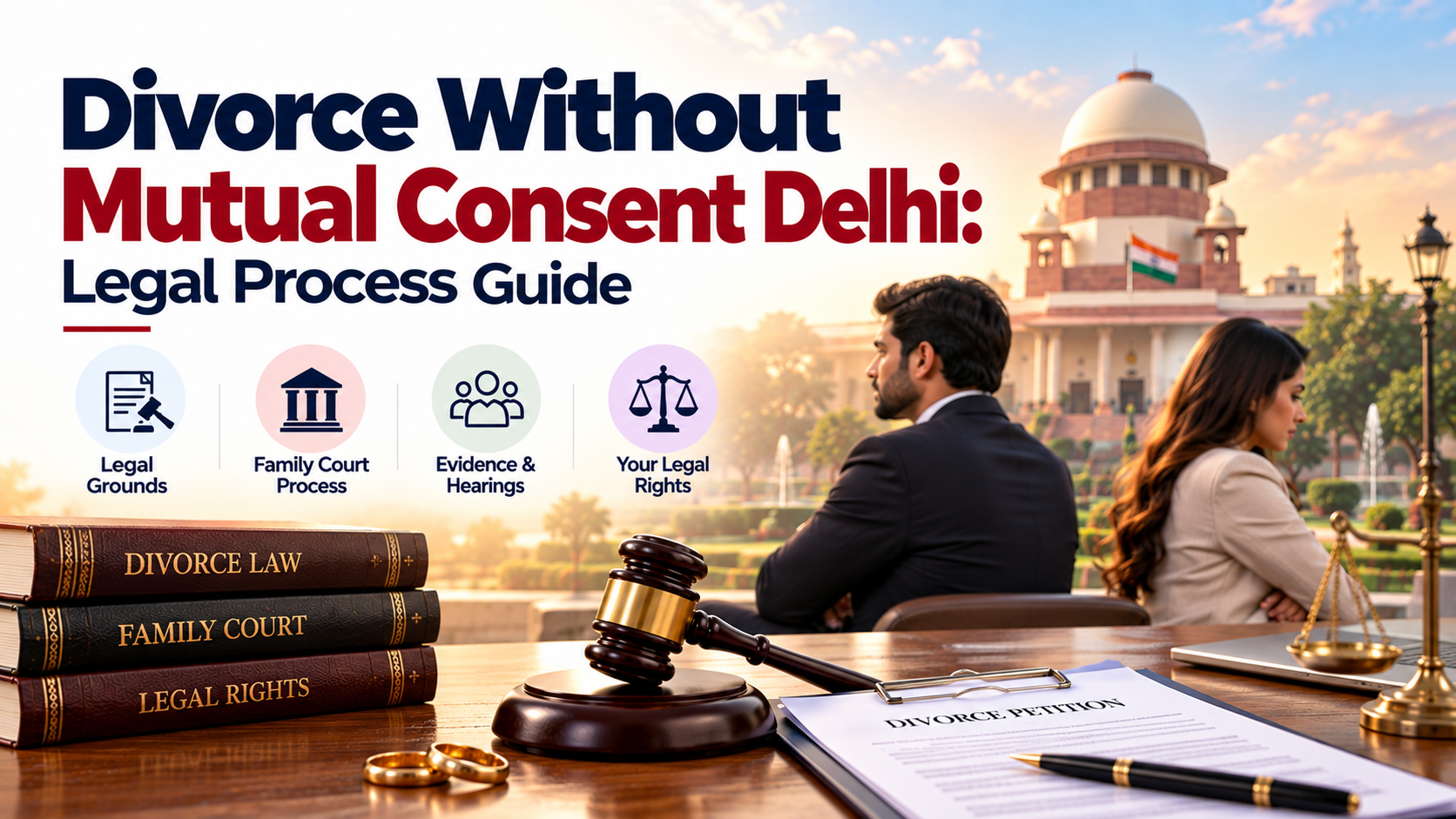
Marriage disputes can sometimes reach a stage where continuing the relationship becomes difficult. While many couples choose mutual consent divorce, there are situations where one spouse does not agree to separation. In such cases, the legal option available is divorce without mutual consent Delhi, also known as a contested divorce.
A contested divorce allows one spouse to approach the court and seek dissolution of marriage even when the other spouse does not agree. However, the process requires proper legal grounds, documentation, and representation before the appropriate court.
If you are facing a difficult marital situation and want to understand your legal rights, Delhi Legal Expert can help you understand the divorce process, required documents, court procedures, and available legal remedies.
This article explains how divorce without mutual consent in Delhi works, what grounds are available, how long the process may take, and why professional legal guidance can make the process easier.
About Delhi Legal Expert
Delhi Legal Expert provides professional legal assistance in Delhi for individuals dealing with family and matrimonial legal matters. Our experienced advocates help clients understand their legal rights, prepare necessary documents, handle court procedures, and receive practical legal guidance according to their specific situation.
Whether you require assistance with contested divorce, mutual divorce, maintenance matters, child custody issues, or other family law concerns, Delhi Legal Expert focuses on providing clear legal guidance and helping clients understand the appropriate steps according to their case.
What Is Divorce Without Mutual Consent?
A divorce without mutual consent Delhi is a legal process where one spouse files a divorce petition without the agreement of the other spouse.
Unlike mutual consent divorce, where both husband and wife jointly decide to end the marriage, contested divorce involves one spouse approaching the court based on legally recognised grounds.
The court examines:
- The facts presented by both parties
- Evidence submitted during proceedings
- Legal grounds mentioned in the petition
- Statements and responses from both spouses
The final decision is made by the court after considering the complete circumstances of the case.
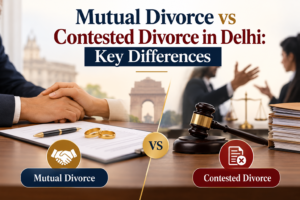
Mutual Consent Divorce vs Divorce Without Mutual Consent
Understanding the difference between these two divorce procedures is important.
| Mutual Consent Divorce | Divorce Without Mutual Consent |
|---|---|
| Both spouses agree to divorce | One spouse files against the other |
| Joint petition is filed | Individual divorce petition is filed |
| Generally faster process | Usually takes more time |
| Fewer disputes | Court examines evidence and arguments |
| Settlement is usually agreed beforehand | Issues may require court decisions |
A person may choose divorce without mutual consent in Delhi when the other spouse refuses divorce or when important issues remain unresolved.
Grounds for Divorce Without Mutual Consent Delhi
A spouse cannot generally file a contested divorce only because they want separation. The petition must be based on legally recognised grounds under applicable marriage laws.
Common grounds may include:
1. Cruelty
Cruelty can include physical or mental conduct that makes continuing the marriage difficult.
Examples may include:
- Physical abuse
- Mental harassment
- Serious emotional distress
- Continuous unreasonable behaviour
The court examines the facts and evidence provided.
2. Adultery
A spouse may seek divorce where there are allegations of an extramarital relationship.
Such matters require proper legal consideration and supporting evidence.
3. Desertion
Desertion refers to situations where one spouse has abandoned the other without reasonable cause for the legally required period.
The court considers factors such as:
- Duration of separation
- Intention behind leaving
- Circumstances of the relationship
4. Conversion of Religion
In certain circumstances, conversion of religion may become a legal ground for divorce depending on the applicable personal law.
5. Mental Disorder or Other Legal Grounds
Certain legal conditions related to mental health or other circumstances may also become grounds for divorce if they meet legal requirements.
A divorce lawyer in Delhi can help determine whether your situation falls under legally accepted grounds.
Divorce Without Mutual Consent Delhi: Step-by-Step Legal Process
The contested divorce process involves multiple stages.
Step 1: Consultation With a Divorce Lawyer
The first step is understanding your legal position.
A divorce advocate reviews:
- Marriage details
- Reason for separation
- Available evidence
- Financial issues
- Child-related concerns
Based on the facts, the lawyer explains possible legal options.
Step 2: Preparing the Divorce Petition
After reviewing the case, a divorce petition is prepared mentioning:
- Details of marriage
- Grounds for divorce
- Facts supporting the petition
- Relief requested from the court
The petition must be drafted carefully because it forms the foundation of the divorce case.
Step 3: Filing the Petition in Family Court
The divorce petition is filed before the appropriate Family Court having jurisdiction over the matter.
The court may depend on factors such as:
- Place of marriage
- Current residence of spouses
- Previous residence together
Step 4: Court Notice to the Other Spouse
After accepting the petition, the court issues notice to the other spouse.
The respondent gets an opportunity to:
- Appear before the court
- File a response
- Present their side
Step 5: Evidence and Hearings
During the proceedings, both parties may present:
- Documents
- Witness statements
- Other relevant evidence
The court evaluates the information before reaching a decision.
Step 6: Final Divorce Order
After hearing both sides, the court may pass a divorce decree if the legal requirements are satisfied.
Documents Required for Divorce Without Mutual Consent in Delhi
The documents required may vary depending on the facts of the case. Common documents include:
- Marriage certificate (if available)
- Identity proof of both spouses
- Address proof
- Marriage photographs
- Proof related to grounds of divorce
- Income documents (if maintenance is involved)
- Child-related documents (where applicable)
- Previous court orders, if any
Your divorce lawyer in Delhi can guide you regarding additional documents required for your specific case.
How Long Does Divorce Without Mutual Consent Take in Delhi?
The timeline of a contested divorce depends on several factors, including:
- Complexity of the dispute
- Cooperation between parties
- Number of hearings
- Evidence required
- Court schedule
Unlike mutual consent divorce, contested divorce generally takes longer because the court needs to examine facts and evidence.
A lawyer can help ensure that the case moves properly by completing documentation and legal procedures correctly.
Divorce Lawyer Fees in Delhi
The cost of a divorce case depends on different factors, such as:
- Complexity of the matter
- Number of hearings
- Legal services required
- Experience of the advocate
Before starting the case, discuss:
- Professional fees
- Court-related expenses
- Expected legal steps
Clear communication about fees helps avoid confusion during proceedings.
Delhi Courts Handling Divorce Matters
Divorce cases in Delhi are generally handled by Family Courts and relevant district courts.
Depending on jurisdiction, matrimonial matters may be filed before courts such as:
- Delhi Family Courts
- Saket District Court
- Rohini Court
- Dwarka Court
- Tis Hazari Court
- Patiala House Court
A divorce advocate can help identify the appropriate court and guide you through the filing procedure.
Why Hiring a Divorce Lawyer Helps
Divorce proceedings involve emotional, financial, and legal challenges. Professional legal assistance can help you:
Understand Your Rights
A lawyer explains your legal position and available options.
Prepare Proper Documents
Incorrect documentation can delay proceedings. Legal assistance helps prepare necessary paperwork.
Handle Court Procedures
Family Court procedures involve multiple steps. An advocate helps manage filings, hearings, and legal communication.
Build a Legal Strategy
Every divorce case is different. A lawyer develops an approach based on your facts and objectives.
How Delhi Legal Expert Can Assist With Divorce Cases
Delhi Legal Expert provides legal support for individuals dealing with matrimonial disputes in Delhi.
Our assistance includes:
- Divorce consultation
- Contested divorce guidance
- Divorce petition preparation
- Document assistance
- Family Court representation
- Legal strategy planning
- Maintenance and custody guidance
- Settlement discussion assistance
Our aim is to help clients understand the legal process and take informed decisions.
Common Mistakes to Avoid in Contested Divorce Cases
Many people make mistakes that can affect their legal proceedings.
Avoid:
- Filing without understanding legal grounds
- Ignoring court notices
- Submitting incorrect information
- Sharing sensitive case details publicly
- Taking major decisions without legal advice
Proper guidance at the beginning can help avoid unnecessary complications.
Frequently Asked Questions
Q1. What is divorce without mutual consent Delhi?
Divorce without mutual consent Delhi is a contested divorce process where one spouse files a divorce petition without agreement from the other spouse. The court decides the matter after considering legal grounds, evidence, and arguments from both parties.
Q2. Can I get divorce if my spouse does not agree?
Yes, you may file a contested divorce petition if your spouse does not agree to separation. However, you must establish legally recognised grounds before the court.
Q3. How long does contested divorce take in Delhi?
The timeline depends on the complexity of the case, cooperation between parties, evidence requirements, and court proceedings.
Q4. Which court handles divorce cases in Delhi?
Divorce matters are generally handled by Family Courts in Delhi. Depending on jurisdiction, cases may be heard in courts such as Saket, Rohini, Dwarka, Tis Hazari, or Patiala House.
Q5. Do I need a divorce lawyer for a contested divorce?
While legal representation requirements may vary, hiring a divorce lawyer can help you understand procedures, prepare documents, and present your case properly.
Q6. What are the grounds for divorce without mutual consent?
Common grounds may include cruelty, desertion, adultery, and other legally recognised reasons depending on the applicable marriage law.
Q7. Can child custody be decided during divorce proceedings?
Yes, child custody and visitation issues can be addressed during divorce proceedings. Courts generally consider the welfare and best interests of the child.
Q8. How much does a divorce lawyer charge in Delhi?
Divorce lawyer fees vary depending on case complexity, legal requirements, and services involved. It is advisable to discuss fees during the initial consultation.
Q9. Can divorce proceedings happen if my spouse does not appear in court?
If a spouse does not appear despite proper notice, the court may proceed according to applicable legal procedures.
Q10. Where can I get legal advice for divorce cases in Delhi?
You can consult a divorce lawyer in Delhi who can review your situation and explain available legal options based on your circumstances.