Delhi Advocate Advisor Expert Divorce & Family Law Representation Since 2010 β Mutual Consent, Contested Divorce, Judicial Separation, Custody, Alimony & Domestic Violence Matters. All Delhi Family Courts.
14+
Years
2010
Established
24Γ7
Support
Delhi Advocate Advisor provides experienced divorce lawyers in Delhi handling mutual consent divorce, contested divorce, judicial separation, maintenance, alimony, child custody, division of matrimonial assets, and dowry/domestic violence matters. Our advocates appear regularly across all Delhi family courts β Tis Hazari, Saket, Rohini, Karkardooma, Patiala House, and Dwarka β and before the Delhi High Court for appeals and transfers. Free consultation available.
A divorce is rarely just a legal filing β it reshapes finances, family relationships, and, where children are involved, their daily lives. As your divorce lawyer in Delhi, our role goes beyond paperwork: we help you understand your realistic options clearly, protect what matters most, and get through the process with as little unnecessary conflict as possible.
Experience across thousands of matrimonial matters in Delhi courts
We appear regularly at Tis Hazari, Saket, Rohini, Karkardooma, Patiala House, and Dwarka
For appeals, transfers, and urgent matrimonial writs
Assess us before committing β no pressure, no cost
We try to resolve your matter without prolonged litigation, where possible
Every cost explained before any work begins
Urgent protection orders and interim applications filed the day you call
Remote consultations and Power of Attorney representation for overseas clients
Types of Divorce
Direct Answer: Mutual consent divorce under Section 13B of the Hindu Marriage Act requires both spouses to agree on all terms β maintenance, custody, and property β and file a joint petition. The process typically takes 6 to 18 months, with the option to waive the mandatory 6-month cooling-off period where the marriage has irretrievably broken down (per the Supreme Court's ruling in Amardeep Singh v. Harveen Kaur, 2017).
If both spouses are willing to separate and can agree on the essential terms, this is almost always the faster, less expensive, and less adversarial route. Our mutual consent divorce service includes:
Timeline: 3β6 months with a waiver; 6β18 months standard.
Direct Answer: A contested divorce is filed by one spouse on specific legal grounds under the Hindu Marriage Act, 1955 β most commonly cruelty, desertion for 2+ years, or adultery. Our contested divorce lawyers build your case from the evidence stage through cross-examination to final arguments, protecting your rights throughout proceedings that can take 2 to 5 years.
Legal grounds we handle:
A contested divorce requires stronger evidence preparation and courtroom advocacy than a mutual consent case, since the outcome depends on convincing the court of your grounds.
Direct Answer: Judicial separation allows spouses to live apart without legally ending the marriage β a formal court decree that suspends marital obligations without dissolving the marriage itself. This is often chosen by couples who have genuine personal reasons for living apart but aren't ready, for religious, financial, or personal reasons, to pursue a full divorce.
We help clients obtain a decree of judicial separation from the family court, and, where the separation later leads to a permanent decision, guide the transition to a full divorce petition if needed.
Direct Answer: Child custody in Delhi is decided under the "best interests of the child" standard, considering the child's age, emotional bonds with each parent, education, and overall welfare. Custody can be physical (where the child primarily lives) or legal (who makes major decisions about education, health, and upbringing) β and either can be joint or sole.
We handle:
Whether you're a single parent seeking sole custody or navigating a joint custody arrangement, we tailor our approach to what genuinely serves your child's welfare β not just what's easiest to litigate.
Direct Answer: Maintenance is claimed under Section 125 CrPC (available to all religions, filed in criminal court) or Section 24 of the Hindu Marriage Act (filed alongside divorce proceedings in family court). Courts weigh both spouses' incomes and earning capacity, the standard of living during the marriage, and the needs of any children.
Courts typically consider:
We help clients understand their realistic financial position early, so decisions about settlement or litigation are made with clear expectationsβnot guesswork.
Direct Answer: Division of matrimonial assets in a Delhi divorce is never a simple 50:50 split β it depends on factors like each spouse's earning capacity, standard of living, children's needs, and the duration of the marriage. Assets typically covered include bank balances, investments, shares, property, and vehicles accumulated during the marriage.
Where possible through settlement, we negotiate directly with the other party's counsel to reach a fair division without prolonged litigation. Once both sides agree, this can be formalized through a Consent Order, allowing you to avoid extended court hearings.
Where agreement isn't possible, the court will determine a binding financial order. In either scenario, experienced representation is essential β both to negotiate effectively and, if needed, to protect your interests before the court.
Direct Answer: Section 498A of the erstwhile IPC (now Section 85 of the Bharatiya Nyaya Sanhita) addresses cruelty by a husband or his family toward a wife, often connected to dowry demands. Domestic violence matters are separately addressed under the Protection of Women from Domestic Violence Act, 2005 (PWDVA), which allows for protection orders, residence orders, and monetary relief.
We represent clients on both sides of these matters:
Dowry harassment and domestic violence cases are emotionally charged by nature, involving complex family, financial, and safety considerations. We approach both sides of these matters with the seriousness and sensitivity they require.
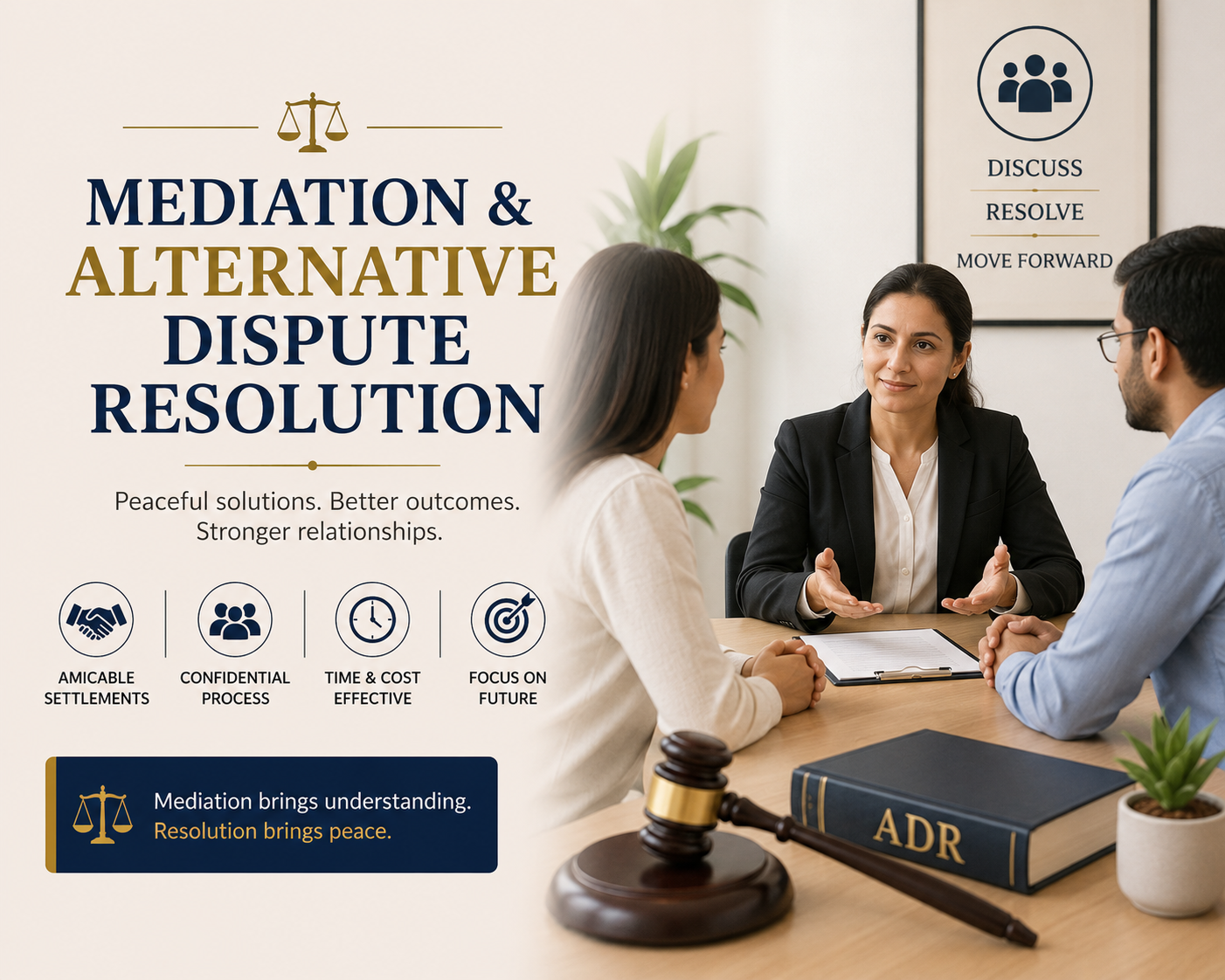
Direct Answer: Mediation allows divorcing spouses to reach a mutually agreed resolution without a prolonged court battle, often resulting in faster, less expensive, and less adversarial outcomesβparticularly valuable where children are involved and an ongoing co-parenting relationship matters.
Our advocates act as skilled negotiators during mediation, representing your interests while working toward a resolution both sides can accept.
Where mediation succeeds, the agreement can be formalized through the court efficiently. Where it doesn't, we're fully prepared to litigate your case with the same rigor.
Jurisdiction Guide
| Your Area | Family Court | Common Matters |
|---|---|---|
| South Delhi | Saket District Court | Contested divorce, custody |
| North / NW Delhi | Tis Hazari Courts | Maintenance, 498A, DV |
| Rohini / Outer Delhi | Rohini District Court | Mutual consent divorce, custody |
| East Delhi | Karkardooma District Court | All matrimonial matters |
| West / Dwarka | Dwarka District Court | Near our Janakpuri office |
| Central Delhi | Patiala House Courts | High Court transfers, appeals |
| High Court matters | Delhi High Court | Appeals, writs, transfers |
Filing in the correct family court matters β an incorrectly filed petition can be returned or delayed on jurisdiction grounds alone.
Our Process
We listen to your situation, assess whether mutual consent, contested divorce, or judicial separation fits your case, and give you an honest picture of the likely timeline, cost, and outcome.
For contested matters especially, we review the facts and evidence carefully before filing β this is where the strength of your case is really built.
We prepare and file your petition in the correct family court and represent you at every hearing.
We pursue settlement and mediation wherever possible. Where a case must be contested to protect your interests, we see it through to final judgment β and, if needed, through enforcement of custody, maintenance, or property orders afterward.
Preparation
Gathering these before your first consultation helps us give you a more accurate assessment from the outset.
Fees
Costs vary meaningfully depending on whether your case is mutual consent or contested, and how long it takes to resolve:
Generally lower cost β fewer hearings, shorter timeline
Higher cost β driven by number of hearings, evidence complexity, and duration
Additional applications filed alongside the main petition
May involve additional documentation, POA drafting, and coordination costs
We provide a clear, upfront fee estimate during your free consultation β no surprise charges mid-case.
Experience Matters
Divorce and family law in Delhi involve procedural nuances β correct jurisdiction, properly drafted consent terms, accurate maintenance calculations, and timely filing of interim applications β where small errors can add months to your case or weaken your position on custody or maintenance. Both Advocate Arun Varma and Advocate Saurabh Singh personally handle matrimonial matters, meaning your case isn't passed off to a junior associate you've never spoken to.
FAQs
Mutual consent divorce typically takes 3β6 months with a cooling-off waiver, or 6β18 months without one. Contested divorce can take 2β5 years.
Yes β interim maintenance can be claimed during proceedings under Section 24 of the Hindu Marriage Act or Section 125 CrPC.
Mutual consent requires both spouses to agree on all terms and is generally faster. Contested divorce is filed on specific legal grounds when one spouse doesn't consent or the parties can't agree on key terms.
Judicial separation allows spouses to live apart without legally ending the marriage β it suspends marital obligations without dissolving the marriage. Divorce permanently ends the marriage.
Property rights depend on how the property is held (jointly, individually, or as ancestral/inherited property) and the specific facts of the marriage β assessed case-by-case during consultation.
You'll be served notice and given the opportunity to respond β through a written statement if contested, or by participating in the joint process if it moves toward mutual consent.
Costs vary based on whether the case is mutual consent or contested, and how long it takes. We provide a clear, upfront estimate during your free consultation.
Yes β we offer remote consultations and can represent NRI clients through a properly drafted power of attorney.
Where custody is contested, the court decides based on the child's best interests β we represent you in presenting your case for interim custody, visitation, or full custody.
In many cases, yes β where both spouses are willing to negotiate in good faith, mediation can resolve maintenance, custody, and asset division faster and with less conflict than litigation, with the final agreement formalized through the court.
Contact an advocate immediately β anticipatory bail and, where appropriate, an FIR quashing petition before the Delhi High Court are both available defenses, and acting quickly matters.

Don't let legal problems overwhelm you. Get the best legal advice in Delhi today.
www.delhilegalexpert.com
Office No. 428, West End Mall, Janakpuri West,
New Delhi - 110058