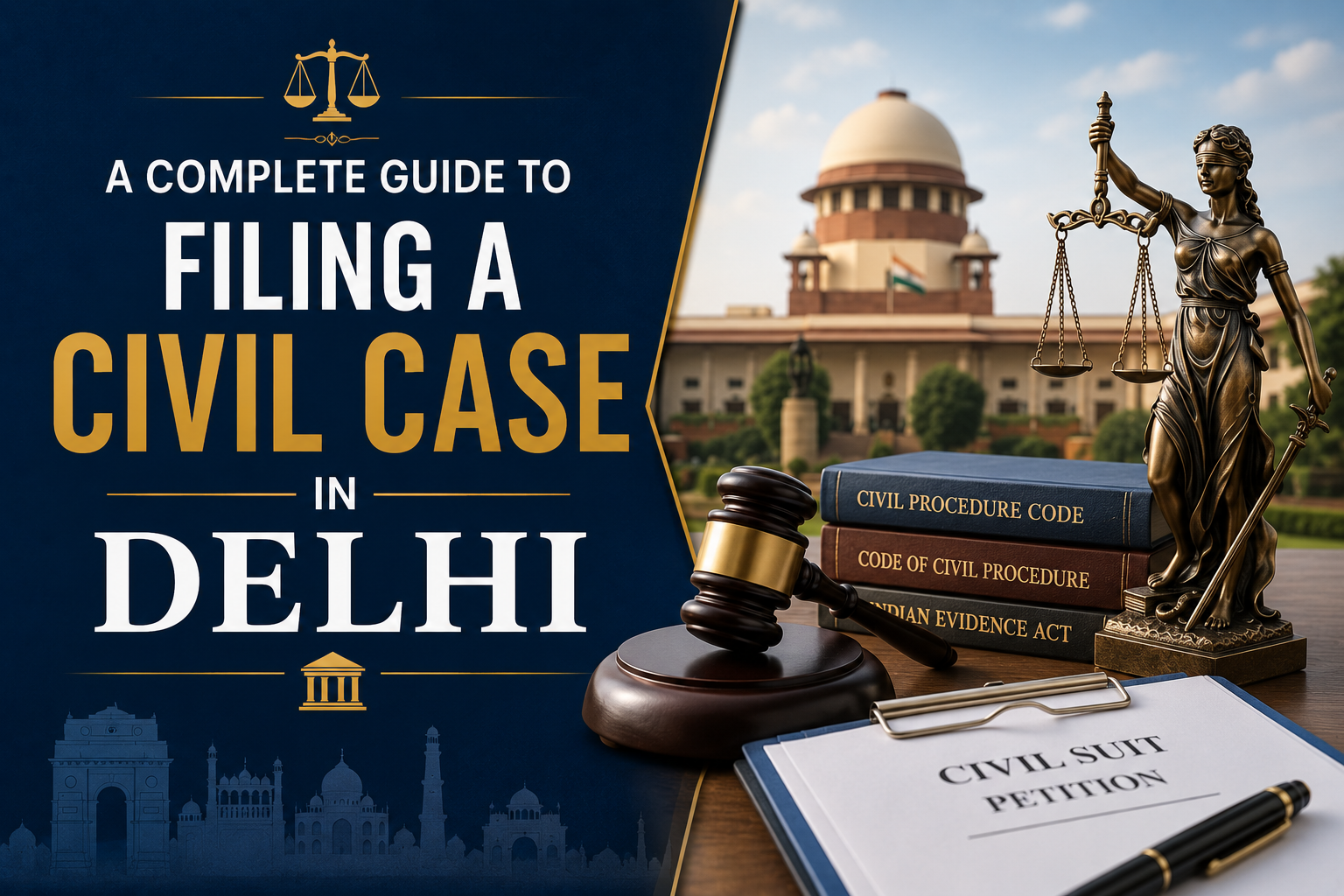
A Complete Guide to Filing a Civil Case in Delhi:
A civil dispute can arise from issues involving property, money, contracts, or personal rights, but filing a case in court can feel confusing for people with no legal experience. Whether you need to recover an unpaid debt, resolve a property dispute, pursue a breach of contract, or address any other civil matter in Delhi, this guide explains each step of the process from beginning to end.
What Counts as a Civil Case?
A civil case deals with legal disputes that do not involve a criminal offence. Instead of prosecution by the state, it focuses on resolving a dispute between two parties through the civil court. In Delhi, common civil matters include:
- Property and land disputes.
- Recovery of money or unpaid dues.
- Breach of contract.
- Partnership and business disputes.
- Tenancy and landlord-tenant disagreements.
- Injunctions to stop someone from taking a harmful action.
- Family property and succession disputes.
Before moving forward, make sure you know whether your matter falls under civil or criminal law. A lawyer can help you make that distinction, as it decides the court that will hear your case and the legal process you need to follow.
Step 1: Determine the Right Court:
The court that hears a civil case depends on its jurisdiction; not every dispute goes before the same court. In Delhi, jurisdiction is based on two factors: the value of the claim, known as pecuniary jurisdiction, and the place where the cause of action arose or where the defendant resides, known as territorial jurisdiction.
- District Courts handle most civil matters depending on claim value — Delhi has multiple district court complexes (Tis Hazari, Karkardooma, Saket, Rohini, Dwarka, and Patiala House, among others), each covering specific areas of the city.
- Delhi High Court handles civil matters above a certain monetary threshold, along with specific categories of disputes like intellectual property.
Choosing the correct court from the beginning is essential, as filing your case before the wrong court can lead to unnecessary delays and procedural setbacks.
Step 2: Send a Legal Notice (Where Applicable):
Many civil disputes involving recovery of money or breach of contract begin with a legal notice before a suit is filed. The notice outlines your grievance and gives the other party a chance to respond or settle the dispute before litigation begins.
A legal notice is not mandatory in every case, but it offers two key benefits. It gives both parties a chance to settle the dispute without going to court and creates a written record of your attempt to resolve the matter before filing a suit.
Step 3: Draft and File the Plaint:
The plaint is the formal document that starts a civil suit. It sets out:
- The facts of the dispute.
- The relief (remedy) you’re seeking from the court.
- The legal grounds supporting your claim.
- Supporting documents and evidence.
File the plaint with the required court fee, which is based on the value of your claim. Depending on the type of case and the court’s procedure, you can file it through the court’s e-filing portal or at the court registry.
Step 4: Court Issues Summons:
After the court accepts the plaint, it sends a summons to the defendant, informing them about the case and directing them to appear before the court and file their response within the given time.
Step 5: Written Statement and Reply:
The defendant submits a written statement to answer the claims made in the plaint. If the written statement introduces new facts, the court may allow the plaintiff to file a rejoinder in reply.
Step 6: Framing of Issues:
After both parties file their pleadings, the court identifies the specific points of dispute between them, known as “issues.” These issues set the scope of the trial and determine the questions the court will decide.
Step 7: Evidence Stage:
The evidence stage gives both parties the opportunity to prove their case through documents, witness testimony, and cross-examination. Since each side must establish its claims before the court, this phase becomes the longest part of a civil case in many instances, especially in property disputes and complex commercial matters.
Step 8: Final Arguments and Judgment:
Following the completion of evidence, both parties present their final arguments before the court. The court delivers its judgment, which includes the decree, the formal order stating the outcome of the case and any relief granted.
Step 9: Execution (If Needed):
A court decree does not always lead to voluntary compliance by the losing party. In such cases, the successful party can file an execution petition to enforce the decree, whether to recover money owed, take possession of property, or secure the relief granted by the court.
How Long Does a Civil Case Take?
How long a civil case takes is one of the most common questions people ask, and the answer varies from one case to another. Straightforward matters with limited disputes over facts may conclude within months through mediation or settlement. Property and commercial disputes involving multiple parties and extensive evidence can take years. The timeline depends on court backlogs, adjournments, and the complexity of the matter as well.
Should You Consider Mediation First?
Many civil disputes in Delhi do not always need to reach the final stage of a court trial. Courts encourage parties to explore mediation and alternative dispute resolution (ADR), and cases may move to mediation centres at different points during litigation. This approach can help in matters like family property disputes and business partnerships, where maintaining the relationship between the parties matters, while reducing the time and cost involved in a full trial.
Documents You’ll Typically Need:
While requirements vary by case type, most civil filings require:
- Identity proof of the plaintiff.
- Documents establishing the cause of action (agreements, receipts, correspondence, property papers, etc.).
- Any prior legal notices sent.
- Proof of the claim amount, where applicable.
Why Legal Representation Matters:
Civil litigation in Delhi requires accuracy at every stage of filing, from following procedural timelines and calculating the correct court fee to preparing precise drafts. A mistake during the filing process can delay the case for months. An experienced civil lawyer in Delhi can help you identify the right forum, prepare a strong plaint, and handle the procedural requirements involved in your case without avoidable setbacks.
Final Thoughts:
Starting a civil case for the first time can feel confusing, but knowing the legal journey from the first step of jurisdiction to the final stage of judgment helps you approach the process with clarity. If you are dealing with a civil dispute in Delhi, taking legal advice at the right time can help you avoid mistakes and ensure your case moves through each stage in the right way.
This article is intended for general informational purposes and does not constitute legal advice. For guidance specific to your situation, consult a qualified civil lawyer in Delhi.
Saptak Chattopadhyay
Kolkata, West Bengal
22.07.2026